
Before you "Just Do It"
give attention to translating intention

Just Do It.
Everyone knows it. Most everyone loves it. It’s easily one of the best consumer-facing lines ever executed. And yet, I can’t emphasize the pain I feel when I see people take this line so literally that they just [do something] too quickly. When tasks are hard and stakes are high, this can lead people to just do it again and again, and I wince knowing that intentions are pure.
While again can be positively associated with mindsets such as practice makes progress and failing fast, there are ways of doing things that don’t have to come at such a grand expense, including ones other than financial. For example, people burnout just as quickly as they burn holes in their pockets, making fatigue (in my humble opinion) the bluest flame.
What comes before it
Clear eyes, full heart, can’t lose.
(It comes from the TV series Friday Night Lights)
An analogy for those of a certain SAT-testing era:
clear eyes, full heart, can’t lose : just do it :: intention : execution
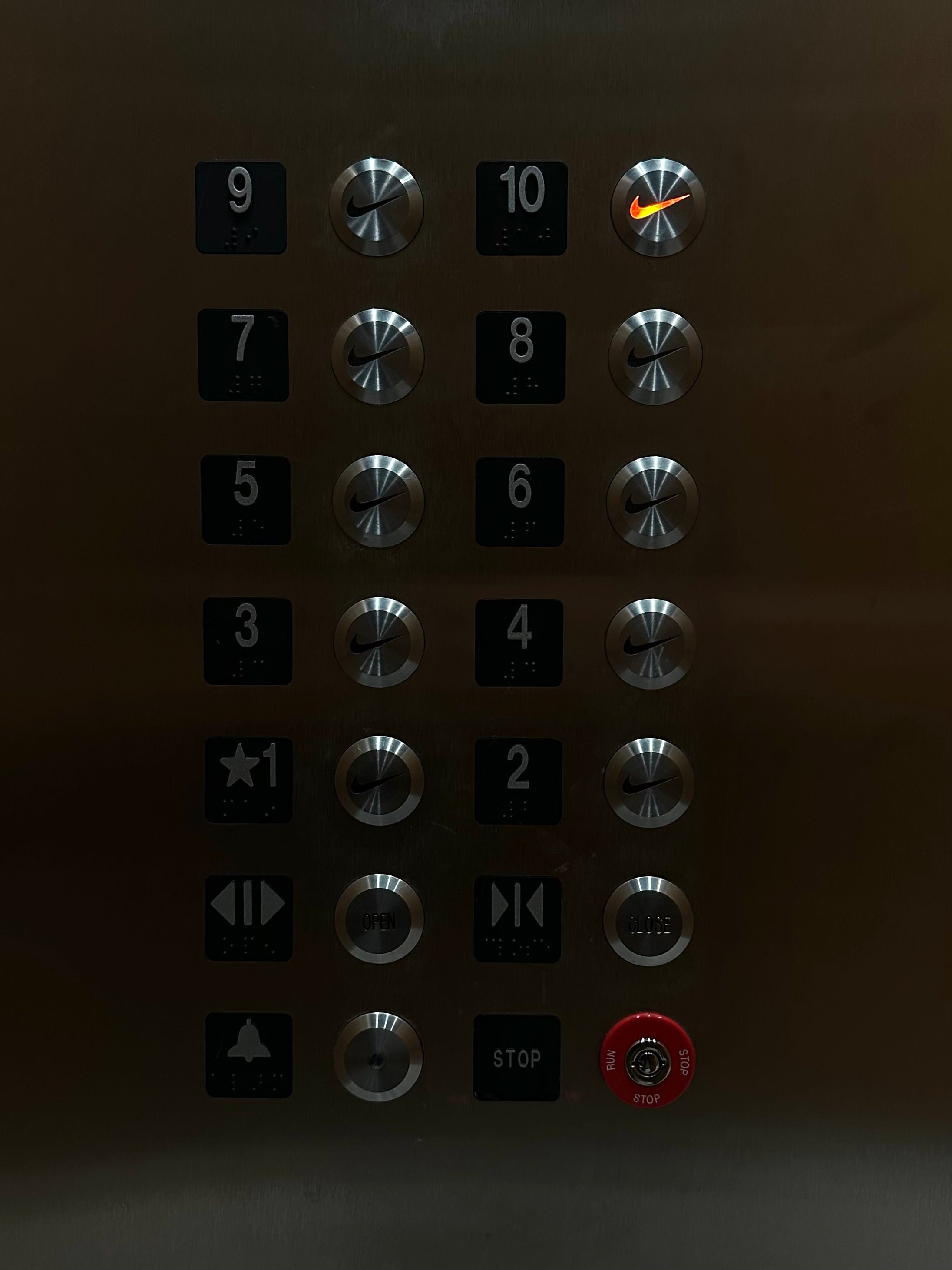
When it comes to intention and execution, I don’t believe one is more important than the other; the most skilled are strong in both and put one before the other. Whether we’re planning to go ten floors up or ten years out, strong intention - which is what we’ll focus on today - is kinder to everyone when it’s rooted in vision, commitment, and scenario awareness (think “situational awareness” but for scenarios, and help me think of a better term!).
Back to the Friday Night Lights line…in a perfect world, eyes and heart are not only in balance, but also stay in balance (if only!). Realistically speaking, it’s fine for these two things to ebb and flow, but I start worrying when heart exceeds vision because this is when people tend to just do things. Heart here can be any kind of emotion - frustration, ambition, elation; it’s not about what’s good or bad, but its positioning relative to clarity. And if clarity is a function of sight, here’s what I’ve learned people don’t always see:
In the vision, precision of the problem and/or objective.
In scenario awareness, the range of probable factors that influence outcome(s).
While oversight is never intentional, I think so much of it is highly preventable (or at minimum, preparable).
Sharpening your sight
Here are a few suggestions to [do hard/high-stake things] with more clarity, creativity, and practicality. My expectation in sharing these isn’t for someone to suddenly hit a hole-in-one - it’s to simply and consistently play under par.
1. Focus on the drop or the ocean. In other words, anchor on a problem or vision.
Drop. Ocean. Problem. Vision. Before you scoff at metaphor and jargon, give me a chance to distinguish these because I think diction is important, as you’ll read later on.
Problem is rooted in difficulty - friction, at best; pain point(s), at worst. The feeling that we’re solving for is frustration.
Vision, on the other hand, is rooted in opportunity. There can be pain points involved, but rather than solving something, this is more about seeing something - betterment of sorts - that, for me, is always through rose-colored glasses.
Another word worth mentioning is objective. Intention is embedded in the definition of objective, which means problems and visions automatically have them.
In saying “focus on the drop or the ocean,” I’m suggesting that the problem is the drop - singularly identifiable and extremely specific, and the vision is the ocean - vast, endless, and waiting to be explored. Start with one or the other instead of both or a place in between.
The reality is that it’s common to land somewhere between, but Statistics teaches us that average is best as an output and not an input to inform outcomes. Outliers and extremes, on the other hand, are crucial inputs for how they reveal information that averages can otherwise obscure. By focusing on extremes, you’ll gain foresight to relevant problems, opportunities, and ecosystem dynamics sooner than had you started somewhere in the middle.
2. Craft for clear articulation, consistent interpretation.
As obvious as this may seem, people tend to focus more on consistent articulation instead of consistent interpretation, so let’s pull these apart:
Clear articulation starts with you and your willingness to search for the words that describe your problem/vision/objective as exactly as possible. I say search (instead of find) because if you’re anything like me, it takes a couple of tries to nail this with the help of a good ol’ dictionary or friends who operate as one.
In contrast, consistent interpretation starts with them and your understanding of their context to adjust your articulation accordingly. What you say matters only as much as how they hear it.
A quick example:
Freelancers have told me they’re thinking about returning to full-time because they want “stability,” but in many cases, what they’re really after is predictability - of income, team, pipeline, or a type of work and deliverable. What might sound like tomato-toMAHto to you is tomato-potato to me. When constraints breed creativity, it’s key to know which constraints are the right constraints to accurately inform articulation, interpretation, and ultimately solutions!
3. Build a playbook and play it out.
This suggestion is either the easiest or hardest for me to describe.
Easiest because I could simply say:
Break it down: Separate must-haves from nice-to-haves in your vision/problem.
Play it out: For each must-have, ask what happens before and after; keep asking until you can’t go any further. Do this with every must-have (and nice-to-have, if you’re new to this game).
Plan it out: Use what you learned in step 2 to guide your sequence of actions. Think Rube Goldberg, and make sure it’ll work (even if it’s not on the first try).
(Sidenote 1 of 3: If you’re wondering why I’m referencing a Rube Goldberg, which celebrates less-than-efficient paths, I’ve seen how the most mechanically-efficient ones may not be the most human-efficient, which is often a relevant factor when it comes to hard/high-stakes things. As such, I aim for what I call pleasant efficiency, which I think a Rube Goldberg is an illustrative example of.)
Here’s where it gets tricky (and why this can be the hardest to describe) without enough know-how or reps:
Knowing what’s needed: Accurately identifying and classifying must-haves and nice-to-haves isn’t always obvious. If you’re unsure, ask others and/or assume it’s a must-have. (Example: an employee referral for a job is practically a must-have these days.)
Understanding all things quality: Good inputs lead to good outputs (or trash in, trash out as some say), but knowing what entails high-quality often takes skill/resources. From there, attaining and achieving quality might be hard, but maintaining it is harder. The best in the game play chess, not checkers and plan long-term. (This helps partly explain why Bobby Fischer prioritized physical fitness.)
Playing with agility: Sometimes things don’t go as planned. Agility is about responding wisely (which is not the same as quickly) when circumstances change. Avoid two things: (a) anchoring to plans more than objectives, and (b) losing sight of objectives as plans change.
If knowing these things is half the battle, putting them into practice is the other. And if you’re lucky enough to play at the highest level, execution isn’t just about action, but excellence.
What makes an athlete
Instead of detailing everything that defines an athlete, I’m going to focus on what I think sets each definition apart:
The sport definition of an athlete colloquially assumes competitiveness - a desire to outperform others (and a feeling I just don’t relate to).
The workplace/corporate definition usually implies a combination of collaboration and performance (where competitiveness is neither encouraged nor discouraged).
(Sidenote 2: Regarding this “neither encouraged nor discouraged” piece, I’d be remiss to not mention that the role of politics is often at play, whether it be on court or in corporate America. The difference is whether the assessment of one’s skill/performance includes or excludes political ability in sport/corporate arenas, which then raises the question: which game(s) are we really playing? I’ll spare you my answer for now so we can get to the last definition…)
The academic one (that I resonate most with) emphasizes proficiency to play rather than wins, which means athleticism is more purely a function of fitness pillars such as strength, endurance, and mobility.
I’ve yet to feel any kind of personal high from winning, or see myself as an athlete by sport standards, but by academic ones, there was a period of time when I did - my 2.5 year job hunt. Because outside of my social life, everything including freelancing was in service of being always-ready and playing at the highest level every time. I nourished for my body and networked for my mind. Off-days were strategic and rest was scheduled. As for “game times” - coffee chats, interviews, thank-you notes, calls to give/take rejection - I left it all on the field. So when the time came to sign and submit my offer, what I felt was not a winner’s high but a sigh of relief and near-disbelief.
My first 8 weeks
My job hunt started January 2021 and ended June 2023. It’s hard for me to comment on whether 2.5 years is a short or long time, but what I will say is that it’s hard to find others who had as healthy of a recruiting-attitude as I had for a similar length of time. I attribute so much of this to the eight weeks that came before it, when I focused on getting my house in order. I…
set a vision of the qualities I wanted my job to have and the pain points I wanted it to solve.
told as many friends as I could count on what I was about to get after come January.
reached out to executives for their takes on resume formats: one page or two? Business or design layout?
mentally prepared for some inevitable highs and lows ahead of me.
All of this was in the effort of achieving three goals: (1) writing one-and-only-one resume; (2) continuing on with this romantic little career of mine; and most importantly (3) not needing to look for another job for at least two years after starting.
I’ve always known that finding a job wasn’t what was going to kill me, but rather the possible need to find another one so soon after that would. For me, one job hunt was going to be effortful, but two within two years of starting would be demoralizing. This is what led me to turn down an attractive offer (in the eyes of others) nine months in. This is also what led me to care a little less about how long I’d been on the job hunt, because getting the job wasn’t my goal - staying in one I wanted was.
Life is a team sport
I recently finished my second season with my company and cannot put into words the small-but-significant sense of alignment I feel and extreme amount of gratitude I hold. If we sync this back to what this entire post has been about, I always knew that once I set my vision after those first eight weeks, I wouldn’t lose sight; it’s just not in my nature to when logic feels linear. Emotions, on the other hand, don’t always, which is why early on, I told as many friends as I could count on. True to form, they kept my heart and hope afloat (twice, actually) when the search hurt.
It’s why I’ll end on a predictable note: Choose your teammates wisely and invest in seeing clearly. This way, you can’t lose when you just do it.
Parting thought (and VIP Sidenote 3!)
There’s a word - strategy - that you didn’t see until right now; this is intentional! As much as intention is part of strategy, they are not - I repeat, NOT(!) - one and the same. Nuance matters and as a strategy snob, this misconception is the last thing I’d want anyone to take away today.
Alright, if you made it to the end, WOW. Thank you for reading, x.