
The health in hibernating
my holiday routine

Hi again - I’m cutting it close re: ‘tomorrow’ because I didn’t feel great last night about publishing this, and yet, here we are. We're here because I (a) fixed what I dearly disliked, and (b) was asked earlier this week if I do anything special for self-care and the first thing that came to mind was hibernation; sending this is the easiest way to explain what I mean.
If you don't get through today's post, I get it. It's structured a little differently than my norm, and for the sake of my sanity, this will not be the new norm.
On that note, let's get this going
While many of you were celebrating the holidays, I was hibernating. The time around Christmas and New Year’s is the closest indulgence to retirement I'll get before actually reaching it, and what I want to start any year right.
Girl, uninterrupted
For nearly two weeks, I relished in the following:
(professionally) detachment from work: removing this layer of responsibility is a major enabler for everything else.
(temporally) the consecutive length: The beauty of hibernation is not in simply making space, but in the extended period of time; it affords me the joy of living as slowly as I want to reap the full benefits of soft fascination (a term that I learned only after writing this, which is a little embarrassing considering how often I’m in it).
(socially) solitude: I avoided all forms of socializing as much as possible. Unless you were visiting, I didn’t see you. Unless you actually called me by phone, I didn’t immediately get back to you.
(physically) rest: I’m a social eater and drinker, so by not socializing, it was easy to eliminate caffeine, alcohol, and eating out, which helped my body recalibrate. I slept and napped and slept some more after an effortful year.
(spatially) my sunny apartment: I love natural light and got to enjoy my apartment during daylight hours, when I’m usually at work.
(mentally) quiet: I’m pretty decent at compartmentalizing as is, but without any work or social commitments, I could control how much noise I’d let in (vs tolerate), which was nearly none :) It let me focus on whatever I felt like doing, which, for me, often starts with a lot of reading.
Servicing my synapses
Hibernation is a means of survival and (feel free to call me dramatic, but) that’s exactly how I see mine; what I’m focused on keeping alive is my range of critical thinking and imagination. By hibernating, I’m able to not only regain my range, but also expand it.
An excerpt that resonated with me recently comes from Ari's Top 5:
Deep Understanding, whether with individuals or organizations, moves us away from the 21st-century obsession with quick fixes. It reminds us that meaningful insight takes time—time to reflect, study, and piece ideas together from the inside out. As poet and potter M.C. Richards observed, growth happens both down into the soil and up into the air. Digging deep means learning from outside sources while at the same time, as Stas’ Kazmierski taught, adapting those learnings to what is true to us, rather than adopting exactly what others are already doing. Thinkers like Carol Sanford, M.C. Richards, and Timothy Snyder embody this sort of Deep Understanding—blending what they learn from others with their own heartfelt beliefs. Organizations that embrace this approach, as Sanford says, “develop the capacity of the mind to do its own thinking,” creating regenerative, meaningful new realities rather than following rules. Deep Understanding will not be found by following the lead of either self-appointed “experts” or authoritarian leaders. Rather, she writes, repeatedly, “the answers we seek are inside ourselves.”
I don’t know if this is going to make sense, but for the sake of giving you a glimpse into how my mind works and wanders, three thoughts surfaced:
Critical thinking is Deep Understanding, rooted in the soil. Imagination is ‘regenerative, meaningful new realities,’ untethered in the air.
Regaining my range is found in Deep Understanding - ‘developing the capacity of the mind to do its own thinking.’
Expanding it is then found through imagination - something I worry that we don’t prioritize enough as adults.
The best way I've seen the importance of imagination explained is in Bessel Van Der Kolk’s book, The Body Keeps the Score: Brain, Mind, and Body in the Healing of Trauma.
Imagination is absolutely critical to the quality of our lives. Our imagination enables us to leave our routine everyday existence by fantasizing about travel, food, sex, falling in love, or having the last word - all the things that make life interesting. Imagination gives us the opportunity to envision new possibilities - it is an essential launchpad for making our hopes come true. It fires our creativity, relieves our boredom, alleviates our pain, enhances our pleasure, and enriches our most intimate relationships. When people are compulsively and constantly pulled back into the past, to the last time they felt intense involvement and deep emotions, they suffer from a failure of imagination, a lot of mental flexibility. Without imagination there is no hope, no chance to envision a better future, no place to go, no goal to reach.
What hibernation breeds
Something funny grows from softly blending critical thinking, imagination, and proper space – an almost unfaltering optimism(!) from being reminded the extent to which perspective is not driven by what we see nearly as much as it is by how we see it (in good times and devastating ones). Critical thinking and imagination help me make the most of anything, and hibernation affords me the space and energy for optimism to bloom.
(I worry that we overcomplicate this or believe that optimism is solely an innate and/or steady state. While it might come more naturally to some, it’s truly a skill that can be nurtured by anyone.)
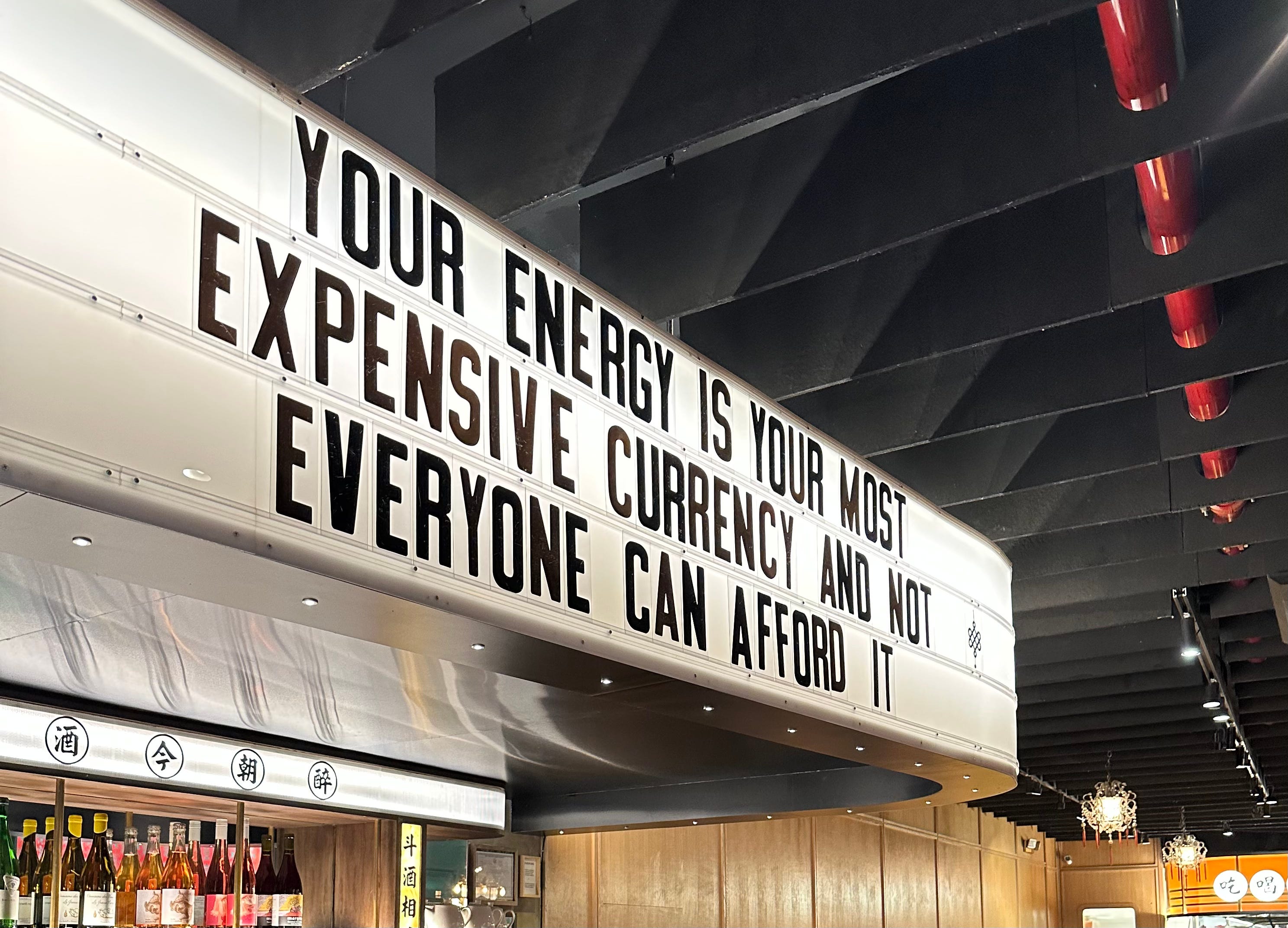
If you’re anything like me, there’s satisfaction and humor (in an inside joke kind of way) in knowing that my optimism is rooted in what others effectively call ‘doing nothing.’ I consider it effortless, but intentionally don’t talk about hibernating as some art of doing nothing because the more we think about it that way, the less time we might make for it, which would be a shame considering how high the ROI is (i.e., high in mindset and post-productivity, low energy investment. People tell me that the time investment is high (and I get that) but I value energy more than time, which makes this a matter of discipline to find and protect it. Separately, it just so happens that Potluck Club shares my POV on energy tonight!).
Same same but different
There’s an argument worth acknowledging in that hibernation is not the only way to nourish critical thinking and imagination; many things such as travel can, too. YES, of course! but I’m writing about hibernation because (unlike travel) I see a shortage of attention being paid to it, especially in ways that aren’t $$$ silent retreats (no offense - it’s an accessibility thing). The reality is that these aren’t substitutes; they're complements! Similar to how we need 13 daily essential vitamins for our bodies to work properly, a China trip in October and a hibernation in December acted as two of many yearly essential vitamins for me to show up well in 2025.
The argument for and benefits of hibernation are similar to those of the outdoors. Being in nature helps pacify the effects of ongoing overstimulation and enhances focus and concentration, clarity and creativity, and a sense of connection. And yet, I don’t recommend hibernating in nature, but in whatever you associate as everyday and ordinary; assuming that your home is a place of physical and psychological safety, I think it's helpful to find beauty in familiarity – specifically in our space and ourselves – without distraction. Seeing new dimensions of beauty here often makes it easier to see it elsewhere.
Parting thoughts
For simplicity, I used forms of the word hibernation, but if we want to get really nerdy for a second, I was probably more closely in a state of brumation, which is to reptiles what hibernation is to mammals; the difference is that brumation still involves low levels of activity and hydration, whereas hibernation does not. (This is a reminder to myself to watch Planet Earth: Asia!)
What a wild year we’re having – LA fires and DOGE, not to mention our day-to-day. So far, my Q1 has been all-consuming and hibernating was a preventative measure for unexpected overwhelm. Had I not, I feel like it the last few weeks would’ve eaten me alive.
In being reminded of this piece, it’s becoming clear that I have a certain devotion towards trying to explain this yearly thing I do – call it hibernation, simply being, whatever else – because of how important it is to me. Whatever your version of hibernation is, I hope it keeps your critical thinking and imagination alive, and optimism high.